 alice
aliceTipping when trying on wedding dresses isn’t required, but it’s a thoughtful gesture many brides choose to offer when they receive exceptional, personalized service. Unlike hair stylists or caterers where gratuity is standard, bridal consultants typically work on commission or salary, making tips optional rather than expected. That said, if your consultant goes above and beyond by scheduling extra appointments, staying late, or helping you find the gown of your dreams after months of searching, a tip between $20 and $100 (or a heartfelt thank-you note with a small gift) shows genuine appreciation.
The confusion around bridal boutique etiquette is understandable. You’re likely managing dozens of vendor relationships, each with different tipping customs, and what to expect during dress shopping isn’t always transparent. Some consultants dedicate hours to your appointments, pulling gowns, steaming fabrics, and offering honest styling advice that transforms your vision into reality. Others provide more transactional service.
The key is recognizing when someone has truly invested in your experience. Wedding dress shopping is one of the most emotional milestones in your planning journey, and the person guiding you deserves acknowledgment when they make it magical. These five etiquette rules will help you navigate tipping decisions with confidence and grace, ensuring you honor both your budget and the people who help you feel like a bride.
How We Chose These Tipping Guidelines
We developed these tipping guidelines by speaking directly with bridal boutique owners, wedding stylists, and industry professionals across the country. Their insights reflect what’s actually happening in salons today, from small independent ateliers in historic neighborhoods to large bridal chains in shopping districts. These experts helped us understand how tipping culture has evolved in the wedding fashion world and what brides can realistically expect in 2026.
We also considered regional differences and the varying business models that shape compensation structures. Some boutiques operate on commission, others pay hourly wages, and many use hybrid models. Understanding these behind-the-scenes details helped us create guidelines that respect both the professionals who serve you and your budget as a bride. Our goal was to give you confident, informed advice that feels right in any bridal salon setting.
1. Tipping Isn’t Expected During Try-On Appointments
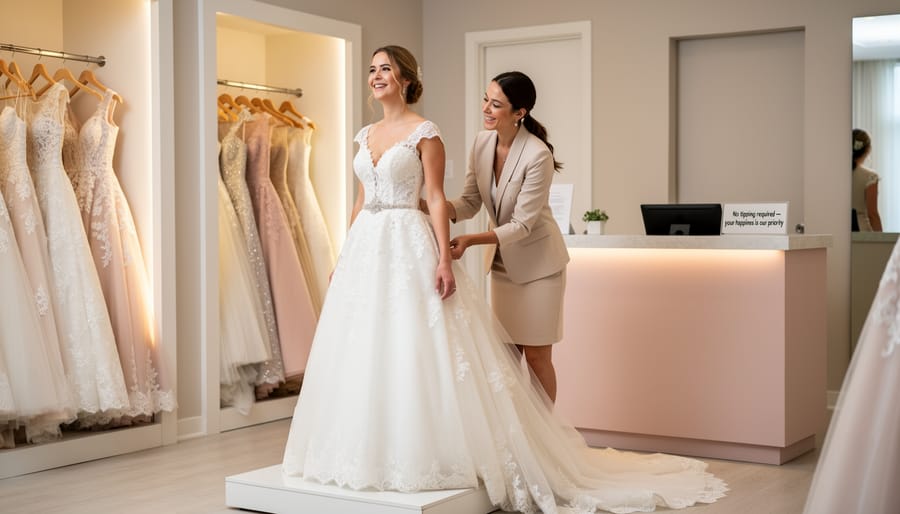
The short answer? You can walk out of your try-on appointment without leaving a tip, and nobody will think less of you. Bridal boutiques don’t function like restaurants or hair salons where gratuity makes up a significant portion of staff income. Consultants typically earn an hourly wage or work on commission based on dress sales, so your purchase already supports their livelihood.
This fundamental difference matters because many brides arrive at their first appointment anxious about the “rules,” worrying they’ll commit some social faux pas if they don’t tip. That pressure is misplaced. The business model itself doesn’t build tipping into the equation the way service industries do.
“In my ten years as a bridal stylist, I’ve never expected a tip during a try-on,” shares Maria Chen, senior consultant at a boutique in Portland. “We’re compensated fairly through our base pay and commission structure. When brides ask if they should tip, I always tell them it’s genuinely optional, not just polite speak for ‘yes, please tip me.’ I want them focused on finding their dream dress, not stressing about cash.”
The confusion often stems from the highly personalized service consultants provide, which can feel similar to other one-on-one experiences where tipping is standard. But the key distinction is clear: bridal consultants are sales professionals, not service workers relying on tips. Your scheduled appointment, whether it lasts one hour or two, is simply part of their job.
2. Consider Gratuity for Exceptional or Extended Service
While tipping isn’t expected for standard try-on appointments, there are definitely moments when a gratuity becomes a genuinely thoughtful way to acknowledge someone who’s gone above and beyond. The key is recognizing when your consultant has provided service that extends far past their typical responsibilities.
Consider offering a tip in these scenarios:
- Your consultant stayed two or more hours beyond your scheduled appointment time to help you find the perfect dress
- They arranged multiple special appointments or came in on their day off to accommodate your schedule
- They tracked down discontinued samples or contacted other boutiques to source specific designers for you
- They provided extensive styling guidance, helping you envision your complete bridal look across several sessions
- They offered emergency alterations advice or connected you with trusted vendors when you were in a bind
Sarah from Portland still raves about her consultant, Michelle, who helped her through an incredibly challenging dress search. After Sarah’s original gown was discontinued before she could order it, Michelle spent weeks reaching out to her industry contacts, finally locating the last sample in Sarah’s size at a boutique three states away. “She coordinated the shipping, stayed late to fit me when it arrived, and even helped me find a backup option just in case,” Sarah recalls. “I gave her $100 and wrote a heartfelt note because there’s no way I would have found that dress without her dedication.”
If you find yourself in a similar situation where someone has truly invested their time, expertise, and personal effort into your experience, a tip of $50 to $150 is a meaningful gesture. The amount can reflect both the extent of the service and your budget, but even smaller amounts paired with genuine appreciation make an impact.
3. Save Tips for Alterations and Final Fittings
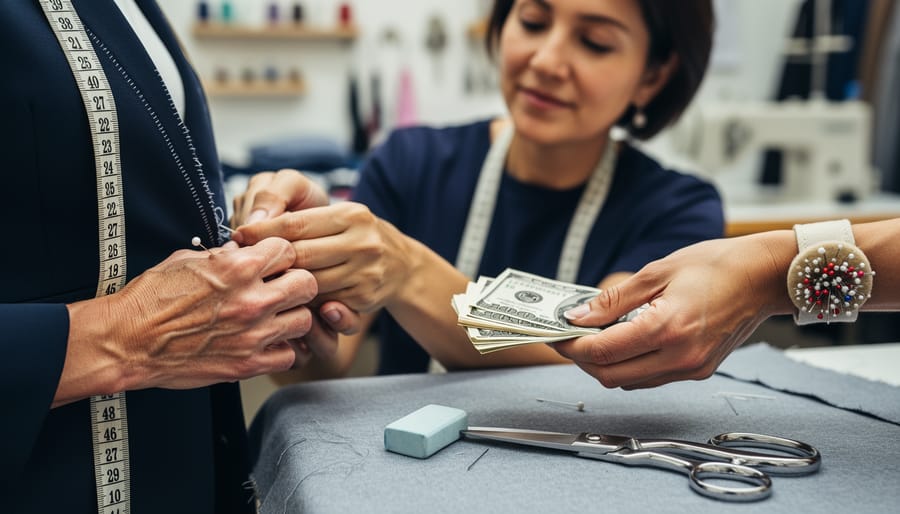
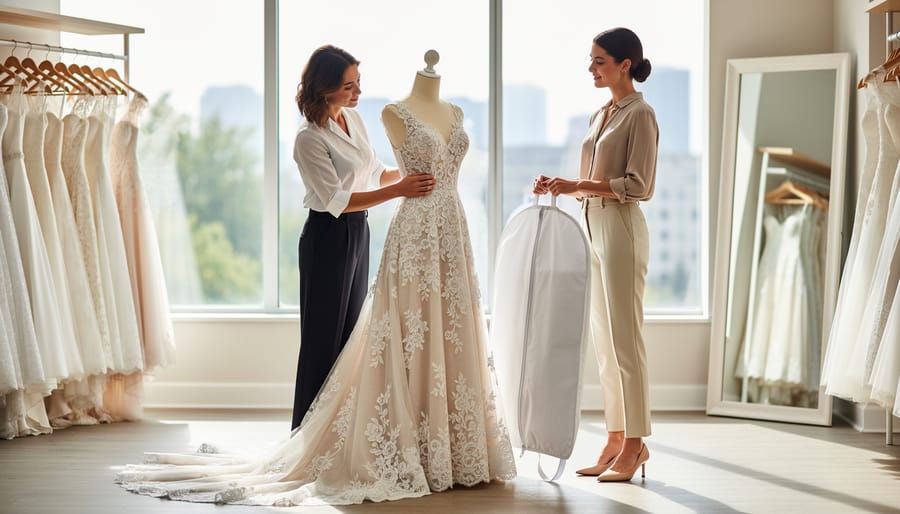
While tipping your bridal consultant is optional, the alterations specialist who transforms your gown deserves different consideration. These skilled professionals spend hours pinning, stitching, and perfecting every detail across multiple fittings to ensure your dress fits like it was custom-made for your body.
Alterations specialists typically work on commission or hourly rates, and gratuity is genuinely appreciated for their meticulous work. Budget 15-20% of your alteration costs, or a flat $50-100 depending on the complexity of the work. A simple hem and bustle might warrant $50, while extensive restructuring, lace appliqué work, or modifications to honor cultural wedding traditions deserves closer to $100 or the full percentage.
Timing matters. Marina Chen, a bridal alterations expert with 18 years of experience, says the tip means most when presented at your final fitting. “That’s when we see the bride’s reaction and know our work truly made her feel beautiful,” she explains. “It’s the culmination of weeks of detailed adjustments.”
If your alterations specialist worked overtime to meet a tight deadline, went above and beyond with intricate beading repairs, or patiently accommodated last-minute weight fluctuations, consider the higher end of the range. Present the gratuity in a sealed envelope with a handwritten note expressing your gratitude for their artistry and patience.
4. Show Appreciation Through Other Gestures
Cash isn’t the only way to show gratitude for exceptional bridal boutique service. A heartfelt handwritten thank-you note expressing specific moments your consultant made you feel beautiful or understood carries immense emotional weight. Many stylists keep these notes in their desks as reminders of why they love their work. You might also consider bringing a small token of appreciation, artisan chocolates, a boutique candle, or a coffee gift card, on your final fitting day.
Positive online reviews hold tremendous value in the wedding industry. Taking ten minutes to write a thoughtful Google, Yelp, or Wedding Wire review detailing your experience helps boutiques attract future brides. Be specific about what made your consultant exceptional: Did they remember your Pinterest inspiration from weeks earlier? Did they suggest a designer you’d never considered that turned out to be “the one”? These details make reviews compelling and useful.
Personal referrals matter enormously. When you genuinely recommend your consultant to friends starting their dress search, you’re giving them business that could last years as those brides return for bridesmaid dresses and future life events.
Melissa Chen, owner of Ivory & Lace Bridal in Portland, recalls a bride who returned on her pickup day with gourmet cupcakes for the entire team and individual cards for each person who’d helped her. “She remembered our names, referenced specific conversations, and even knew I was a new mom,” Melissa shares. “That personal touch meant more than any tip. We still talk about her kindness three years later.” Simple gestures, remembering to ask about your stylist’s weekend, considering what to wear when bringing your entourage to show respect for the appointment, and expressing genuine appreciation, create meaningful connections that transcend transactional relationships.
5. Ask About Boutique Policy If You’re Unsure

When in doubt about tipping expectations, the simplest solution is to ask directly. Most bridal boutique managers and owners welcome this question and would rather provide clear guidance than have you worry throughout your appointment. You might say something like, “What’s your boutique’s policy on gratuity?” or “Is tipping customary here?” This straightforward approach eliminates uncertainty and shows respect for the salon’s practices.
Tipping customs vary significantly by region and even between individual boutiques. In major metropolitan areas like New York or Los Angeles, gratuity might be more common, while salons in other parts of the country may rarely see tips for try-on appointments. Some high-end boutiques include service in their pricing structure and explicitly discourage tipping, while independent shops might leave it entirely to the bride’s discretion. Cultural backgrounds also influence expectations, so what feels natural in one community might differ in another.
Remember that asking questions is part of smart wedding dress tips for any bride. The staff at bridal salons understand that this is likely your first time navigating this experience, and they genuinely want you to feel comfortable. There’s no such thing as a wrong or embarrassing question when it comes to wedding dress shopping etiquette. Being upfront about tipping shows thoughtfulness, not ignorance, and helps you build a positive relationship with your consultant from the start.
Making Your Dress Shopping Experience Memorable
The most important thing you’ll take away from your dress shopping journey isn’t just the perfect gown, it’s the experience itself. While tipping etiquette matters, don’t let it overshadow the magic of saying yes to your dress.
Your consultant becomes part of your wedding story, so approach every appointment with openness and genuine appreciation. A warm smile, clear communication about your vision and budget, and respect for their expertise create a foundation for an amazing experience. When you treat your bridal team with kindness, they’ll often go above and beyond without any expectation of gratuity.
Trust your gut throughout the process. If something feels off or you’re uncertain about boutique policies, speak up. The best bridal consultants want you to feel comfortable and celebrated, not confused or pressured.
Remember, this is one of the most special moments in your wedding planning journey. Whether you choose to tip, write a glowing review, or simply express heartfelt thanks, what matters most is that you’re honoring the people who helped you find the dress you’ll wear down the aisle. Focus on the joy, and everything else will fall into place.
Common Questions About Tipping at Bridal Boutiques
Do bridal consultants work on commission?
Many consultants earn a combination of hourly wages and commission on dress sales, though compensation structures vary widely by boutique. Because they’re typically paid for their time and expertise, tipping isn’t built into the business model the way it is for restaurant servers.
Should I tip if there’s already a service fee on my invoice?
No, service fees generally cover the cost of your appointment time and the boutique’s overhead. If you’ve been charged a consultation or try-on fee, additional tipping isn’t expected unless you want to recognize truly exceptional personal service.
What about tipping when my bridesmaids come for their dress appointments?
The same guidelines apply: tipping isn’t required for standard bridesmaid appointments. If your consultant coordinates a large bridal party with patience and care, a group tip from everyone or a thoughtful gift shows appreciation without putting pressure on individual attendants.
Can I tip via credit card, or should it be cash?
Cash is always preferred because it goes directly to the individual and avoids processing fees. If you want to tip but don’t have cash on hand, ask the boutique manager whether they can add gratuity to your credit card payment and ensure it reaches your consultant.
These questions come up constantly because tipping culture feels murky when you’re navigating an industry that blends retail with personal service. The reality is that bridal boutiques don’t follow one universal standard, which is exactly why asking directly never hurts. Your consultant would rather answer a straightforward question about their shop’s policy than have you stress over what’s appropriate. Trust that most people in this business got into it because they love helping brides, not because they expect tips at every appointment.